Digital Storytelling
16/07/2021
DICTIONARY
Disability
a physical or mental condition that limits a person’s movements, senses, or activities.
Dys (prefix)
– abnormal, or faulty
– difficult or painful
– unfavorable or bad
Etymology: via Latin from Greek dus-
Calculate
– to determine (something) by using mathematical methods;#
– to arrive at an opinion by reasoning or practical experience; estimate:
Remedial Teaching;
Developmental education is assigned to assist students in order to achieve expected competencies in academic skills.
Etiology (aetiology);
the cause, set of causes, or manner of causation of a disease or condition.
Phenotypic (relating to severity);
the observable characteristics of an individual resulting from the interaction of its genotype(the genetic constitution of an individual organism.) with the environment.
General Reference List:
https://www.eurekalert.org/pub_releases/2007-03/ucl-tro032107.php
https://onlinelibrary.wiley.com/doi/epdf/10.1111/mbe.12206
https://www.tandfonline.com/doi/abs/10.1080/135467996387552
https://www.sciencedirect.com/science/article/pii/B9780123705099001790
https://medium.com/adityaux/designing-for-dyscalculia-making-cash-transactions-easier-a16984551e54
working memoryhttps://link.springer.com/article/10.3758/BF03211288
https://psycnet.apa.org/record/1969-01971-001
Throughout the previous semester and the first week of Semester 2 2021, I spent many hours getting my head around the scope of my project. My initial research had me moving in the direction of education and learning methods, aimed at people with learning disabilities.
INITIAL RESEARCH
I asked myself: Am I targeting graphic design in the real world (working) or in an educative context? What areas of daily life are the hardest with a learning disability and how can I raise awareness and find research for effective design?
Could I create a series of books which are housed on a website regarding all different learning disabilities – dyslexia, dyscalculia, colour blindness, dysgraphia etc – research individually.
Over the break I created a list and plan for my first set of research regarding my topic –
- define disability
- identify the areas with the least research.
- identify what a disability is (scientifically and simply) – accessible info
- change the perception of disability
- the concept of ‘universal design’
- the struggle for a fair and inclusive society
- informative and physiological differences
“Disabled” :a reason hindering something from happening. :Any defect in an individual’s physical or mental functions and the difficulties it causes in one’s movements, attitude and behaviors, puts the individual in a different category in the community. This difference is assumed to be the reason for the uncertainty and discrimination the disabled experience. In the basis of discrimination, lies possessing “unusual characteristics”
Socio-political understanding – The definition of sociopolitical is something that involves both social and political factors. An example of something that is sociopolitical is the issue of minority representation, which is influenced by both social attitudes towards “equality” and by political/ governmental policies and funding.
– I delved briefly into this concept as it was important for me to understand the societal standpoint on disabilities of any kind. Funding goes towards the bettering of the average/advanced communities, without working for the minorities first. The gap in design increases and is not addressed. To target a learning disability, I have to place it in both a personal and societal context.
DICTIONARY
Remedial Teaching;
Developmental education is assigned to assist students in order to achieve expected competencies in academic skills.
Etiology (aetiology);
the cause, set of causes, or manner of causation of a disease or condition.
Phenotypic (relating to severity);
the observable characteristics of an individual resulting from the interaction of its genotype(the genetic constitution of an individual organism.) with the environment.
General Reference List:
https://www.eurekalert.org/pub_releases/2007-03/ucl-tro032107.php
https://onlinelibrary.wiley.com/doi/epdf/10.1111/mbe.12206
https://www.tandfonline.com/doi/abs/10.1080/135467996387552
https://www.sciencedirect.com/science/article/pii/B9780123705099001790
https://medium.com/adityaux/designing-for-dyscalculia-making-cash-transactions-easier-a16984551e54
working memoryhttps://link.springer.com/article/10.3758/BF03211288
https://psycnet.apa.org/record/1969-01971-001
Dyscalculia Educative Notes
Most people process numbers very easily, almost automatically past the age of basic learning. People with Dyscalculia do not. Dyscalculia is just as prevalent in the population as dyslexia and attention deficit hyperactivity disorder – around 5% of the population is affected. Dyscalculia has not been given the same attention as other disorders.
Behavioural Characteristics
Poor retrieval of arithmetic facts from memory
Perseverant use of immature calculation strategies – these strategies may not cause issues during the stage of basic skills, however will likely disrupt their ability to acquire skills and methods as they progress.
Primary and Secondary Developmental Dyscalculia
Primary DD relates to impaired development of brain mechanisms for processing numerical magnitude information
Secondary DD refers to mathematical deficits stemming from external factors such as poor teaching, low socio-economical status and behavioural attention problems.
Domain General Cognitive mechanisms; working memory, visual-spacial processing and attention. Several studies show that children and teens with numerical difficulties also perform at a lower speed and level on tests of working memory, such as the ‘Phonological loop’ and ‘visuo-spatial sketchpad’.
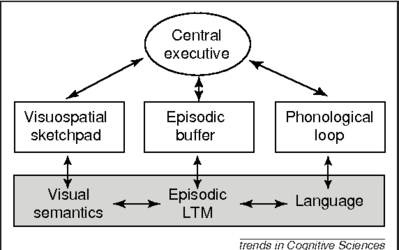
For example, if one tried to remember a telephone number by repeating it over and over in the few moments before dialing, this effort would take place in the phonological loop.
Visuospatial function refers to cognitive processes necessary to “identify, integrate, and analyze space and visual form, details, structure and spatial relations” in more than one dimension. Visuospatial skills are needed for movement, depth and distance perception, and spatial navigation.
Learning Matters
Learning Matters is a NZ group of special educator who support children who experience language and numerical based learning differences. Their practices are based on the Orton Gillingham approach to teaching.
“Our belief is that all dyslexic children in New Zealand have the right to receive and benefit from evidence-based literacy education.”
Speld NZ
Speld is a group who uses research-based methodology to train New Zealand teachers and special educators. These teachers are given the ability to support students in every level of schooling who have learning disabilities, like Dyslexia, Dysgraphia and Dyscalculia. SPELD mostly works through an online context – activities and parental response.
Pro-Ed NZ
Since 1993 the team at Pro Ed has provided learning support and behaviour modification for many children, adolescents and their families, and adults with literae and numeric following challenges and special abilities:
Structured Maths approach providing explorations, investigations and explicit teaching with an emphasis on the language of maths.
 Hazel beth
Leave a comment